Why menopause changes your skin so fast, and what actually helps
Menopausal skin changes are driven by three things at once: falling oestrogen, broken sleep and higher cortisol. Together they form a cycle that skincare on its own cannot reach, which is why the serums that used to work seem to have lost their effect. Supporting the physiology underneath, above all deep sleep, gives them their conditions back, and that is what helps most.
Your moisturiser feels less moisturising. The glow has thinned out. Fine lines that seemed theoretical a year ago now look settled in. If you are somewhere in perimenopause or menopause and nodding along, none of this is imagined, and none of it means you need to try harder with your skincare. This page explains what is changing, why your skincare now needs support from underneath, and a calm, evidence-aware way to give it that.
What menopause changes in your skin, from collagen to barrier
When oestrogen declines, a lot happens at once. Collagen production drops steeply: research published in Obstetrics & Gynecology found women lose roughly 30% of their skin collagen in the first five years after menopause, then about 2% a year after that. The barrier weakens, so skin runs drier and reacts to products it used to tolerate. Hyaluronic acid levels fall, which is where the plumpness goes. Healing slows, and inflammation runs higher.
The sleep side nobody connects to skin
Menopause does not only reach your skin through hormones. Between 40 and 60 percent of menopausal women report sleep problems, and night sweats and hot flushes cut into delta sleep, the deepest stage. That stage is precisely where growth hormone is released, the signal that tells your skin cells to produce collagen. Less delta sleep means less overnight repair, at exactly the moment oestrogen is already pulling collagen down.
The cycle that makes it feel sudden
A broken night raises the next day's cortisol. Higher cortisol breaks collagen down faster and makes the following night's sleep worse. Oestrogen, sleep and stress each make the others worse, which is why the change can feel like it arrived all at once rather than gradually.
Why menopausal skin needs more than serums, and what the extra part is
Retinol, peptides, vitamin C, ceramides: all of them have their place, and they do help. What they work on is the surface. The sleep side, the cortisol and the overnight repair window need something else running alongside them. A peptide serum can do far more for skin that is receiving its repair signals than for skin that is not, so the same bottle often works better once the conditions underneath are right.
Supporting that underlying physiology works alongside your skincare, and it is the extra part. Think of it as the layer underneath that lets everything else do its job properly.
What the research says about sound and menopause
There is a small peer-reviewed body of research here, and it points the right way. The best-known randomised controlled trial is a 2024 study in Revista da Associação Médica Brasileira, in which 61 menopausal women listening to music twice daily for five weeks scored significantly better on menopause symptom, sleep quality and depression scales than controls. Two earlier trials published in Menopause, the field's leading journal, found reduced symptoms and improved sleep and quality of life.
Binaural beats work on the two mechanisms underneath: delta-range beats have been linked to faster sleep onset, fewer night-time awakenings and more time in slow-wave sleep, and listening sessions have been associated with lower cortisol. No study has yet tested binaural beats on menopausal women specifically, so putting the two strands together is a reasonable inference from adjacent evidence rather than a proven treatment. What the evidence does cover is the calm and the sleep, and that is exactly where the skin benefit comes from.
The Perimenopause & Menopause routine
The longest routine in the app, built for harder-to-reach sleep: an extended wind-down that settles into delta-range frequencies for the night's repair window, with a stage for barrier-first skincare if you want it. Headphones, lying down, and nothing else asked of you.
Try the free taster →A menopausal skin evening you can start tonight
None of this needs new products or extra hours. A repair-first evening looks like this:
- Cool the bedroom and sleep in light layers. Night sweats fragment delta sleep, and temperature is the first lever you control.
- Put screens down thirty minutes before bed, so cortisol can fall when it is supposed to.
- Press play on a delta-frequency sound routine and lie down. Let it carry you toward the deep stage where repair happens.
- Keep skincare barrier-first: gentle cleanser, ceramide moisturiser, and save the strong actives for stretches when you are sleeping well.
- Hold consistent sleep and wake times, even after a broken night. Regularity rebuilds deep sleep faster than catching up does.
Done consistently, this reopens the repair window your skin has been missing. For the full mechanism and the studies behind it, read why menopause changes your skin, or how deep sleep builds collagen.
For the nights that break up, an hour of descending binaural beats for bedtime.
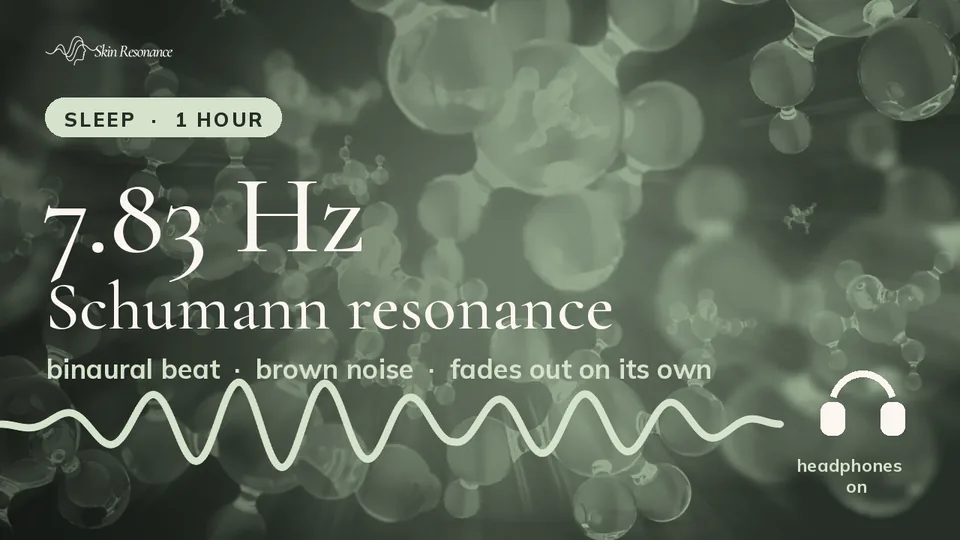
7.83 Hz sleep track: Schumann, then theta, then delta
An hour for bedtime. Fifteen minutes at 7.83 Hz, twenty at 4 Hz theta, twenty-five at 2 Hz delta, over a quiet bed of brown noise, the app's own sound engine. The screen dims after five minutes.
Watch on YouTube →Frequently asked
Why has my skin changed so much during menopause?+
Falling oestrogen is the main driver: collagen production drops sharply, the barrier weakens so skin gets drier and more reactive, and hyaluronic acid levels fall. Broken sleep and higher cortisol then accelerate all of it. The change is real, and the encouraging part is that two of the three drivers respond to what you do in the evening.
How much collagen do you lose during menopause?+
Research published in Obstetrics & Gynecology found women lose roughly 30% of their skin collagen in the first five years after menopause, then about 2% a year after that. The rate is not fixed: sleep quality, stress levels and barrier care all influence how much repair happens alongside the decline.
Can menopausal skin improve?+
Yes. You cannot change the hormonal shift itself without medical support, which is a conversation for your doctor, but the other two drivers, sleep and cortisol, are workable levers. Deeper sleep restores the overnight repair window where collagen is made, and skin stays responsive to that at every age.
How does sleep affect menopausal skin?+
Growth hormone, which signals your skin to produce collagen, is released mainly during delta sleep, the deepest stage. Night sweats and hot flushes cut into exactly that stage, and 40 to 60 percent of menopausal women report sleep problems. Protecting deep sleep protects the repair your skin still does.
What is the best skincare routine for menopausal skin?+
Keep it barrier-first: a gentle cleanser, a ceramide moisturiser and daily SPF, with stronger actives added gradually during stretches when you are sleeping well. Then treat sleep and calm as part of the routine, because they set the conditions every product works in.
Skin Resonance is a wellness web app, not a medical device, and does not diagnose, treat or cure any condition. For medical questions about menopause, including hormonal treatment, please speak to your doctor.