Why your skin looks tired and dull, and how to get the glow back
Dull skin is usually the look of missed overnight repair. Cell turnover, barrier recovery and hydration all run during the deep stages of sleep, so when sleep stays shallow, skin turns flat and grey even after a full eight hours. The fix starts with sleep depth, and your brightening products work better once that is in place.
You slept, more or less, and you still look like you didn't. That flat, tired look usually has one root. Skin does nearly all of its visible upkeep overnight, and shallow sleep quietly cuts that work short. This page explains what makes skin look dull, why brightening products do their best work on well-rested skin, and how to get the deeper rest that brings the glow back.
What makes skin look dull and tired
Overnight, well-rested skin runs a maintenance shift: cell turnover speeds up, the barrier repairs, and hydration redistributes. When sleep stays shallow, that shift gets cut. Turnover slows, so older surface cells sit longer and scatter light instead of reflecting it. The barrier loses more water overnight, and circulation to the skin drops, which reads as the grey, flat look of a bad week. A 2025 review in Archives of Dermatological Research, covering 66 studies, confirmed the pattern: sleep deprivation impairs hydration, increases water loss through the skin and reduces elasticity.
Sleep depth counts more than sleep hours
Two people can sleep the same number of hours and wake with completely different skin, because one of them spent more of the night in slow-wave sleep, the deep stage where growth hormone is released and repair actually runs. If you sleep eight hours and still wake up dull, the problem is almost certainly depth, and depth responds to things you can change.
Why brightening products work best on well-rested skin
Exfoliating acids and vitamin C do good work at the surface. They clear the build-up of dead cells and even out tone, and they are worth keeping in your routine. What they cannot do is reopen the repair window that shallow sleep closed, because that part happens inside the skin during the night. Give them a well-rested surface to work on and the same products go noticeably further, which is why the extra part worth adding is deeper sleep.
How deeper rest restores the glow
The things that deepen sleep are simple and they work: temperature, timing, light and a proper wind-down. Sound can help with the last of these. Delta-range frequencies have been linked in studies to faster sleep onset and more time in slow-wave sleep, and they give a racing evening mind something calm to settle into. The studies so far are small and the effects modest, and they point the right way. As part of a wind-down that asks nothing of you beyond pressing play, sound is an easy addition, and it gets your evening skincare done at the same time.
The Tired, Dull Skin routine
Deep rest frequencies to support sleep quality, cell turnover and overnight hydration, with a stage for your evening skincare if you want it. Twenty minutes, headphones, lying down.
Try the free taster →Five changes that deepen sleep, starting tonight
From the full twelve, these carry the most weight:
- Cool the bedroom to 16 to 18°C and layer bedding instead. Deep sleep needs a small drop in core temperature, and most bedrooms are too warm for it.
- Keep your bedtime inside a 30-minute window every night, weekends included. Regular timing is what lets your body drop into deep sleep quickly.
- Stop drinking alcohol within three hours of bed. It helps you fall asleep, then fragments the deep stages for the rest of the night.
- Get bright light in your eyes within an hour of waking, outdoors if possible. Tonight's deep sleep is set by this morning's light.
- Put the phone down an hour before bed and press play on a wind-down routine instead. The problem is the mental arousal more than the screen.
For the complete list and the mechanism behind it, read how to sleep better for your skin, or go deeper with how delta sleep builds skin.
For the sleep changes above, an hour that descends from 7.83 Hz to delta and dims its own screen.
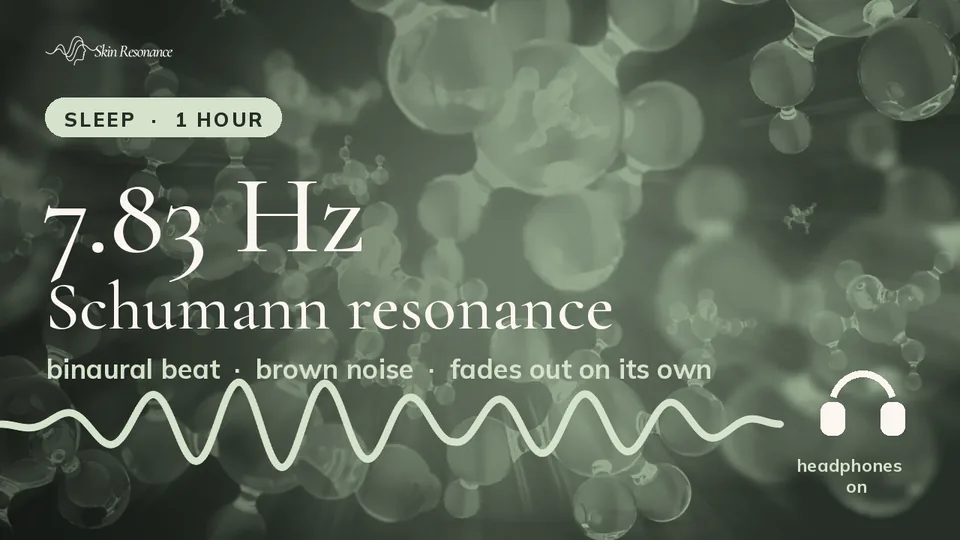
7.83 Hz sleep track: Schumann, then theta, then delta
An hour for bedtime. Fifteen minutes at 7.83 Hz, twenty at 4 Hz theta, twenty-five at 2 Hz delta, over a quiet bed of brown noise, the app's own sound engine. The screen dims after five minutes.
Watch on YouTube →For the morning after a poor night, twenty minutes with something cool on the face and a massage while the puffiness drains.

Puffy face in the morning: Schumann, then alpha, then 285 Hz
Twenty minutes for a puffy morning. Six at 7.83 Hz with something cool on the face, ten at 10 Hz alpha for massage with whatever you use, four at 285 Hz for serum and SPF. Headphones on for the first two stages.
Watch on YouTube →Frequently asked
Why does my skin look dull and tired?+
Dullness is usually missed overnight repair. In shallow sleep, cell turnover slows so older surface cells scatter light, the barrier loses more water, and circulation to the skin drops. The result is the flat, grey look of a poorly slept week, even when total hours seem fine.
Can lack of sleep cause dull skin?+
Yes. A 2025 review of 66 studies in Archives of Dermatological Research found sleep deprivation impairs skin hydration, increases water loss and reduces elasticity. Depth counts more than duration: eight shallow hours can leave skin duller than seven deep ones.
How do I get my glow back?+
Start with sleep depth: a cool bedroom, consistent bed and wake times, morning light, no alcohol near bedtime and a real wind-down. Gentle exfoliation and hydration help the surface along, and they work far better once the overnight repair shift is running again.
How long does it take for skin to look brighter?+
Hydration and circulation respond within days of deeper sleep, so the first change is often quick. Full cell turnover takes around four weeks, which is the horizon for texture and tone. The routine is cumulative: every well-slept night adds a shift of repair.
What is the best evening routine for tired skin?+
Keep the products simple, a gentle cleanse and a hydrating moisturiser, then treat sleep itself as the active step: screens away, lights low, and a wind-down that actually settles your nervous system, whether that is breathing, reading or a calming sound routine.
Skin Resonance is a wellness web app, not a medical device, and does not diagnose, treat or cure any condition. For a diagnosed skin condition, please see a dermatologist.